
A+ · 9.9/10
Town Square Innovative Adult Day Care
Senior & Home Care · Check Item 20
Main-Street Sleeper
Hidden Gem

Preferred Care at Home is a family-owned, 40-year-old senior home care franchise built around aging in place, with a $88,350–$111,500 startup range.

Preferred Care at Home sends trained caregivers into the homes of older adults so they don't have to leave. Some clients need a hand with chores and a friendly face. Others need help with bathing, meals, and medications. Some need 24-hour live-in care, memory support for Alzheimer's and dementia, nursing-level help like wound care, or end-of-life comfort. The company also offers specialty packages for new mothers and surgery recovery, plus a program called Smooth-Transition Care that aims to keep seniors out of the hospital after a stay.
As an owner, you run this from an office, not a storefront. You recruit and schedule caregivers, meet families, and make sure the care plan is working. The brand's own franchise page says owners wear five hats in action and grow through three stages: the baby phase, the business phase, and the company phase. A family portal lets relatives check on the care being given, no matter how far away they live.
Most older adults say they want to stay in their own homes. Families want that too, but they often can't provide the care themselves. That gap is where this business lives. Needs also tend to grow over time. A client who starts with a few hours of help can move to daily care, then live-in care. The company's own site points to labor and industry benchmark data to make the case for demand.
The track record backs up the pitch. Preferred Care at Home has been around since 1984, with roughly 85 locations and a 4.9 out of 5 rating across 224 Google reviews. Eight federal SBA loans show 0.0% unpaid, compared with a 3.8% U.S. franchise norm. That is a small sample, but it is a clean one. FranchiseMate scores the brand 8.0 out of 10 (A-).
Clients or their families pay for caregiver hours, from a few visits a week to round-the-clock coverage. Recurring schedules mean revenue can repeat week after week.
The brand says it is best known for its 24-hour live-in service. These are long, steady cases, which makes them a core revenue driver.
Dementia, Alzheimer's, and end-of-life support need specially trained caregivers. Families facing these situations often need longer-term, higher-touch help.
Packages for new mothers and surgery recovery, Smooth-Transition Care, and licensed-caregiver nursing support add more ways to earn from one client base. Programs like Ever There Care are built to fit what each family needs.
Initial franchise fee of $47,500, plus training and an exclusive territory finalized during the nine-step process.
You pay 5% on entry-level revenue, stepping down to 3% on revenue in higher tiers. The ad fee is a flat $180 instead of a percentage.
The brand says it never takes revenue shares or forces unnecessary vendor use. You can pick partners based on what helps your business.
Still family-run into its third generation, and not private-equity owned. Owners get direct access to people invested in their location.
A required nine-step process covers breakeven math, homecare essentials, territory study, and a day-in-the-life look at the job. You see the work before you commit.
This fits someone who cares about older adults and families, and who can build trust fast. You need to be comfortable hiring and managing caregivers, handling hard conversations, and showing up in your community. The brand says it looks for owners with a heart for service, not just money. Strong local networking with doctors, hospitals, and senior communities helps a lot.
Item 19 earnings figures were not provided in the data we reviewed, so ask the franchisor directly what owners actually earn and how long breakeven typically takes. Read Items 3 and 12 for litigation and territory protections, factor the 5%-to-3% royalty into your numbers, and plan for caregiver recruiting and retention, which drive any home care business.
Check open availability in your 5-digit zip code, compare all startup packages side by side, and get our buyer checklist sent straight to your inbox.
Tri-axis geometry computed directly from Preferred Care at Home’s Item 7 cost, Item 15 rules, and federal SBA tape.
On Franchise Mate's impersonal scoreboard, Preferred Care at Home earns a 8.0/10 FranScore (Grade A-, 80/100) with high public proof and a "Table-Pounder — Do the Homework" call against Senior & Home Care peers. Public files list 85 open locations and $88,350 – $111,500 in startup costs. Always verify Item 19 sales and Item 20 closures in the current FDD.
You get in for 18% less cash than the typical Senior & Home Care brand ($122,000).
Clean bank tape! Only 0.0% of 8 SBA loans went unpaid.
$47,500 sign-up fee looks like 47.5% only because total build-out is low ($99,925).
Running ~85 open spots, adding about 4.5 per year over 19 years.
Proof on file: VetFran Military Discount.
Shows 10 of 10 core cost, loan, and store facts across 9 public file(s).
| What We Checked | Preferred Care at Ho | Peer Avg. | All Avg. | Rank |
|---|---|---|---|---|
| Typical Buy-In Cost (Item 7) | $99,925 | $122,000 | $195,000 | Beats 67% |
| Est. Cash Out of Pocket | $45,000 | $75,000 | $65,000 | Beats 81% |
| Upfront Sign-Up Fee (Item 5) | $47,500 | $49,500 | $36,000 | Beats 57% |
| Ongoing Royalty (Item 6) | 5%, stepping down to 3 | 5.0% | 6.0% | Beats 96% |
| Unpaid SBA Loans (2010–2026) | 0.0% (8 loans) | 4.8% | 3.8% | Beats 87% |
| Estimated Open Spots | 85 spots | 23 spots | 33 spots | Beats 65% |
| Target Item 19 Yearly Sales | $220,000+/yr | $268,400 | $468,000 | 2.2x buy-in |
Public records estimate Preferred Care at Home startup costs at $88,350 – $111,500, including a $47,500 upfront sign-up fee and 5%, stepping down to 3% ongoing royalty. Buyers usually need $45,000 out of pocket and face ~$1,079/mo on a 10-year SBA loan, targeting $220,000+/yr in FDD Item 19 gross sales.
| Cost category | Public estimate | What to check in FDD | Action |
|---|---|---|---|
| Initial investment (Item 7) | $88,350 – $111,500 | Estimate across build-out, gear & opening cash | View FDD portals |
| Initial franchise fee (Item 5) | $47,500 | Paid upfront when signing franchise agreement | Check Item 5 |
| Ongoing royalty & ad fees (Item 6) | 5%, stepping down to 3% | Recurring share of gross sales + ad/tech fees | Check Item 6 |
| Out-of-pocket cash & liquid capital | $45,000 | Cash needed before SBA loan + working reserve | Run loan math |
| Minimum net worth rule | Verify with brand | Typical franchisor & SBA lender net-worth screen | Check net worth |
Review current Franchise Disclosure Documents before comparing figures; real build-out and lease costs vary by city.
Stress-test cash flow, SBA 1.25x DSCR approval, and 12 FDD red flags before contacting any salesperson.
Before paying full Item 7 build-out costs and waiting 6–12 months to open, check whether an existing Preferred Care at Home owner is selling a turnkey store with day-one customers.
Qualified buyers rarely pay 100% cash. Compare 15%–20% SBA 7(a) down payments ($45,000 est. / ~$1,079/mo) against a $0-tax-penalty 401(k)/IRA rollover (ROBS) and grab our 1-page CPA fee tear-sheet.
Word-for-word lines saved when we checked public pages. Brands can change fees at any time, so treat these as past estimates.
| Min Total Investment Usd | 88350“The total initial capital required ranges from $88,350 to $111,500 .” | Source Link |
|---|---|---|
| Max Total Investment Usd | 111500“The total initial capital required ranges from $88,350 to $111,500 .” | Source Link |
| Royalty Fee Text | 5%, stepping down to 3%“Royalties 5%, stepping down to 3% Tiered-down: you pay 5% on entry-level revenue, stepping to 3% on revenue earned within higher tiers.” | Source Link |
| Unit Count | 85“These figures reflect actual gross revenue reported by 85 franchise locations that were fully operational throughout 2024.” | Source Link |
| Founded Year | 1984“Since 1984 Build a Meaningful Business Helping Seniors Stay Home” | Source Link |
| Hq Location | Knoxville, TN, USA“National Headquarters 414 Clinch Avenue, Knoxville, TN, USA” | Source Link |
| Industry Category | Senior Home Care Services“Senior Home Care Services At Preferred Care at Home, we’re passionate about keeping elderly people safe and independent in their own home.” | Source Link |
Preferred Care at Home runs as a small local office model with heavy crew (~24 staff / sba avg) operating on office hours + 24/7 care dispatch. You run a small local office meeting families and hospital planners to line up home care. Your biggest job every week is hiring, scheduling, and keeping dependable hourly caregivers.

Heavy Crew (~24 Staff / SBA Avg) — Ask Item 20 owners how they recruit, train, and keep dependable team members.
Small Local Office · Office Hours + 24/7 Care Dispatch — Confirm lease rules or vehicle specs in FDD Items 7 and 8.
Hands-On Day-to-Day — Check FDD Item 11 for classroom and on-site launch training hours.
Sampled locations average 4.90 / 5.0 across 224 sampled Google reviews. We surface both praise and critical reviews verbatim from Google Places alongside anonymous owner reality checks.
Be the first verified Preferred Care at Home owner to share an anonymous reality check — helping future buyers see real build-out costs, weekly hours, and home-office support beyond glossy brochures.
Federal FOIA loan records from 2010 to 2026 show 8 SBA 7(a) and 504 loans for Preferred Care at Home, with a 0.0% unpaid charge-off rate compared to the 3.8% U.S. franchise norm. The brand is approved on the U.S. SBA roster (#S2238). Past loan payback never guarantees future store profit.
Federal records show 8 SBA loans totaling $2,497,000, with 0.0% going unpaid.
| Total SBA Loans (2010–2026) | 8 |
|---|---|
| Average Loan Size | $312,125 |
| Paid Off / Still Paying | 3 Paid Off · 5 Active |
| Unpaid Loans (Defaults) | 0 (0.0%) |
| Avg. Jobs per Loan | 24.0 |
| States With Most Loans | FL(2), OH(1), AZ(1), MA(1), NC(1) |
| Estimated Cash Down | — |
|---|---|
| Estimated Loan Amount | — |
| Estimated Monthly Payment | — |
| Monthly Sales to Cover Loan | — |
| Record type | What it covers | Scope & status | Access |
|---|---|---|---|
| Franchise Disclosure Document (FDD) | Official 23-Item legal filing from Preferred Care at Home | Verify current annual filing | Unlock free FDD & Red-Flag Report |
| U.S. SBA 7(a) & 504 FOIA Tape | Federal loan count, average loan size & charge-offs | FY2010–FY2026 (8 matched loans) | Read SBA methodology |
| Cross-Checked Public Registries | AllUSAFranchises, FranchiseGator_Index, FranchiseHelp_Index, FranchiseOpportunities, FranchiseSolutions, Franchise_com, Official_Brand_Site, SBA_7a_504_FOIA, SBA_Directory | 9 independent files | Open AEO data sheet (.md) |
Legal Parent: Preferred Care at Home
Current company leaders are listed in Item 2 of the brand's current FDD.
Listed Home Office: Knoxville, TN, USA
Request our free Preferred Care at Home Executive FDD Prep, Cost & Red-Flag Report via 1-click email confirmation on this page, and have a franchise lawyer and CPA check Items 5, 7, 8, 19, 20, and 21 in Preferred Care at Home's current binding FDD before signing.
Sales reps hand you their 3 happiest 'trophy' owners. Get the 14 questions to ask active & former Item 20 franchisees plus 3 open peer backups.
Enter your name, mobile number, email, and 5-digit zip code above, then click the 1-second confirmation link sent to your inbox. We immediately email your private buyer dossier for Preferred Care at Home (legal parent: Preferred Care at Home)—including any archival public-record FDD PDF on file in our vault—stamped for preliminary research only under 16 CFR Part 436.
Preferred Care at Home posts a 8.0/10 FranScore at $88,350 – $111,500, while Senior & Home Care peer Town Square Innovative Adult Day Care scores 9.9/10 at Est. $1,671,000 – $2,851,000 (SBA 7a). Compare upfront sign-up fees, unpaid SBA loan rates, and open store counts side by side below before requesting either brand's FDD.


| Franchise Brand | FranScore | Est. Startup Cost | Unpaid SBA Loans | Open Spots | Head-to-Head |
|---|---|---|---|---|---|
| Town Square Innovative Adult Day Care | 9.9/10 (A+) | Est. $1,671,000 – $2,851,000 (SBA 7a) | 0.0% | — | Head to Head → |
| Signal Health Group | 9.2/10 (A+) | $50,000 – $100,000 | — | 13 | Head to Head → |
| Bee Hive Homes | 8.8/10 (A) | Est. $1,547,000 – $2,639,000 (SBA 7a) | 0.9% | 200 | Head to Head → |
| Caring Hearts in Home Care | 8.7/10 (A) | $4,999 – $6,850 | — | 300 | Head to Head → |
| Chefs for Senior | 8.7/10 (A) | — | — | 100 | Head to Head → |
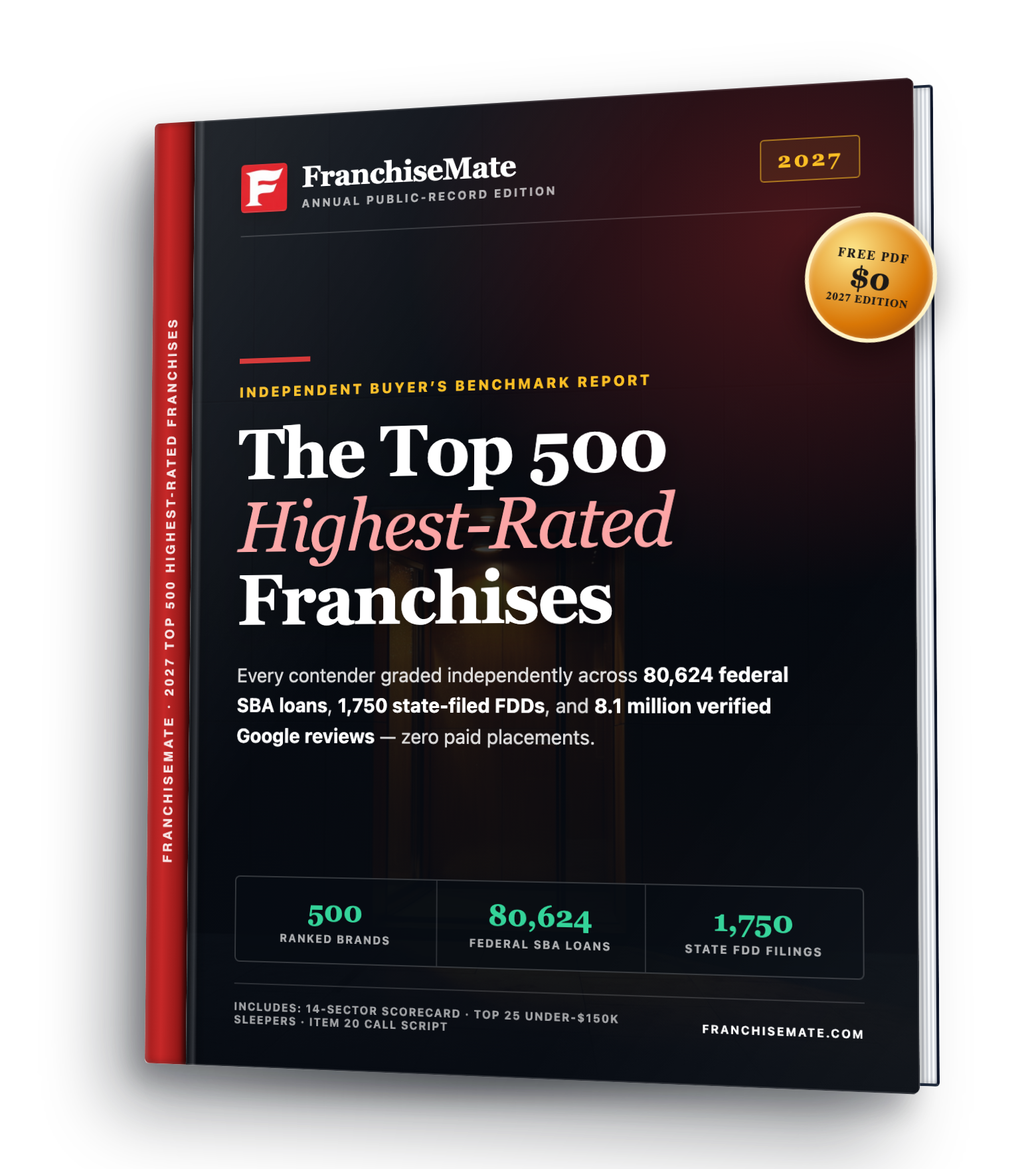
Skip paid portal ads. We ranked the Top 500 franchises in America using 80,624 federal SBA loans, 1,750 state-filed FDDs, and 8.1 million Google reviews — plus our 14-sector default scorecard and 25 under-$150K hidden gems.
100% free editorial newsletter · Never sold to brokers · Preview what’s inside →
Compare 3 contenders side by side before any rep calls. Select the brands you want included with Preferred Care at Home, enter your 5-digit zip, and unlock your custom packet for $0.
Enter your 5-digit zip and cash range to check territory availability and unlock our executive FDD & SBA report (+ archival FDD PDF when on file) for $0.