Home-Based & Mobile · 9-Min Read · 2,101 Words + Interactive Tools · Updated Nov 2026
Mosquito, Pest Control & Lawn Treatment Franchises: How Recurring Route Math Works
Suburban recurring route franchises turn a home garage and $95K–$175K into auto-renewing 21-day homeowner subscriptions—if you master customer acquisition cost and route density.
Recurring 21-day mosquito and turf routes turn one truck into 350+ auto-billed suburban homeowner subscriptions.
Why do investors love recurring pest, mosquito, and turf-treatment route businesses?
Home & Yard Services covers 663 brands and 5,650 SBA loans in FranchiseMate's ledger, with a 6.16% unpaid charge-off rate and average buy-ins around $112K–$254K. Pest, mosquito, and turf-treatment routes live in that neighborhood because customers repeat on a calendar, not on a whim.
Think of a route like a paper route with a bigger bill. A homeowner signs up for a seasonal plan, such as a barrier spray every 3 to 4 weeks, and your truck shows up on schedule. You aren't hunting a brand-new sale every Saturday. You're servicing a list.
Here's a made-up teaching example: 300 yards paying about $70 a visit for 7 visits adds up to roughly $147,000 in yearly revenue. Real prices, renewal rates, and costs swing by city and brand, so treat that as practice math, not a forecast. Mosquito franchise cost varies widely, so check each brand's Item 7 before you trust any headline number.
Repeat revenue: renewals beat one-off jobs because you aren't re-buying the customer each year.
Route density: five clients on one street means less windshield time.
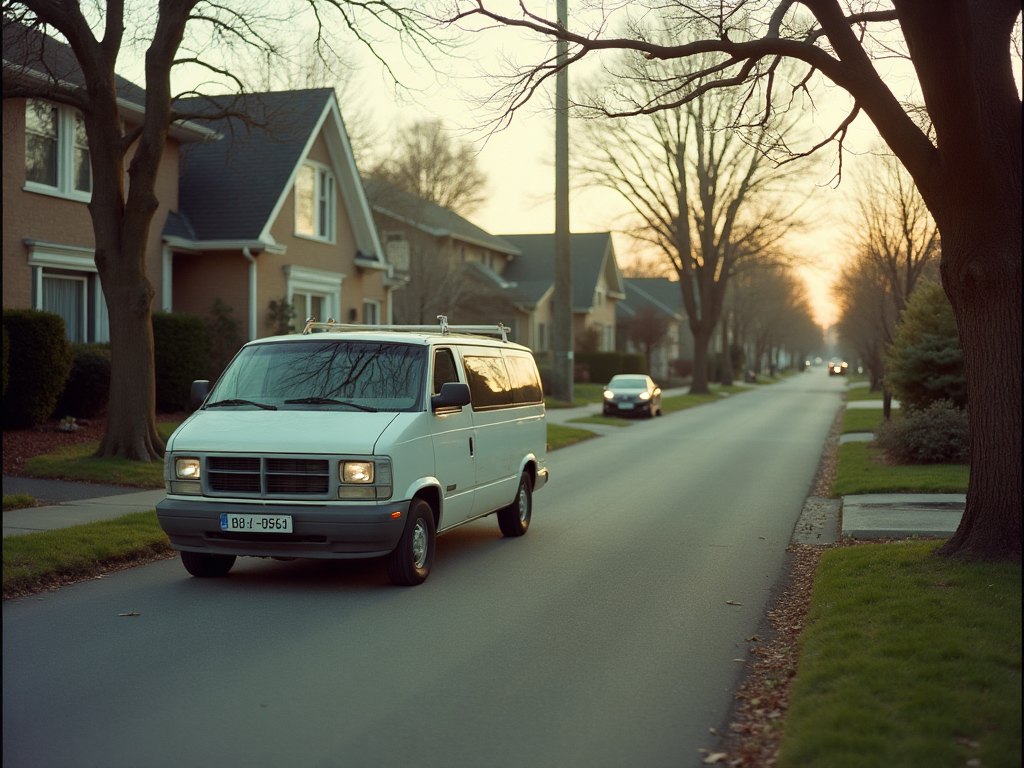
Home-based starts: many brands let you run from a garage with a branded truck or van.
Weather swings: wet springs, late frosts, and droughts change visit counts.
Recurring doesn't mean lower-overhead. Customers cancel, and a bad season can thin a route. Use the Stock-Style Screener to compare brands before you fall for a pretty brochure.
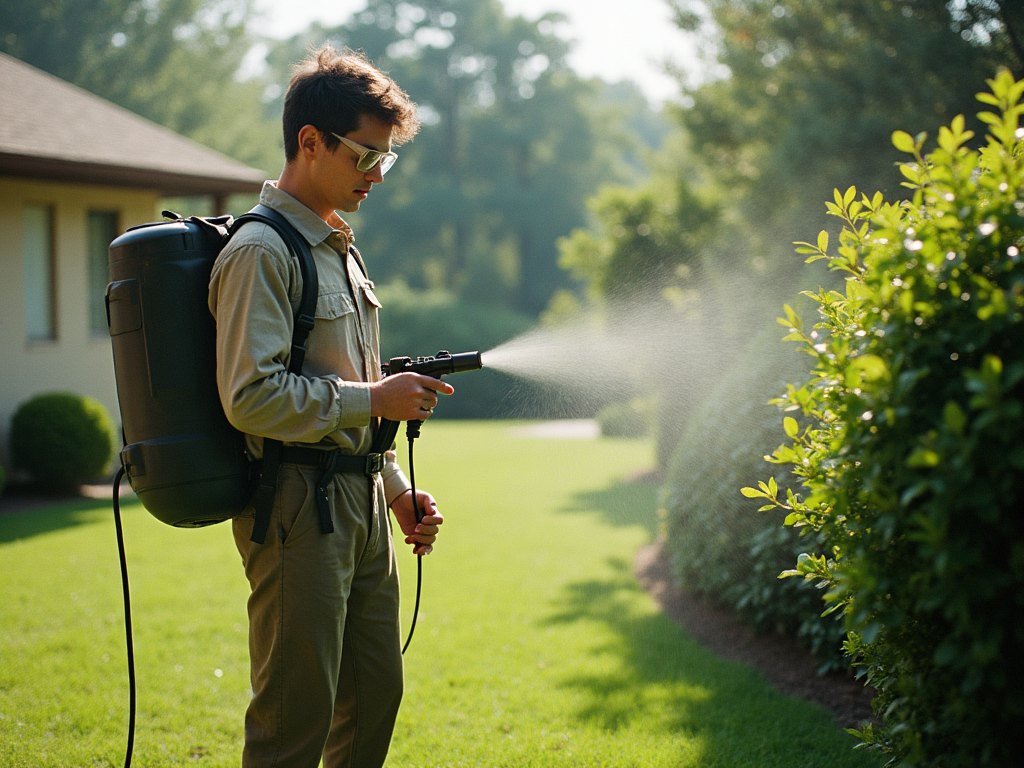
Home & Yard Services averages $112K–$254K to open, but inside that band the margin gap comes down to labor hours. A mowing crew sells hours of sweat. A licensed treatment tech sells a short application, a product program, and a plan that renews. Treatment tends to pay better per hour worked.
Picture two trucks on the same suburban street. The mowing crew has two or three workers, a trailer, and a 30-minute cut for maybe $45–$60. The treatment tech works alone, spends 15 to 25 minutes on the lawn, and bills a similar or higher ticket. Those are rough public ranges and they vary by market.
Labor load: mowing often needs a crew, while treatment can run on one licensed tech per truck.
Equipment wear: mowers, blades, and trailers take a beating, while sprayers need steady upkeep too but replace less often.
Pricing power: a 6- or 8-visit program is easier to defend than "cheapest cut in town."
Upsell ladder: grub control, aeration, tick and mosquito add-ons stack on one stop.
Treatment isn't free money. You pay for products, insurance, licensing, and callbacks when a customer swears the weeds never died. Weather can wreck application timing, too.
Here's how Home & Yard stacks up against neighboring sectors in FranchiseMate's data.
Sector benchmarks: buy-in ranges and SBA unpaid rates (rough public estimates; vary by brand and city)
Sector
Brands
SBA Loans
Avg Buy-In Range
Unpaid Rate
Home & Yard Services
663
5,650
$112K–$254K
6.16%
Cleaning & Restoration
551
4,973
$122K–$218K
6.17%
Senior & Home Care
238
2,710
$111K–$237K
5.77%
B2B & Office Services
1,004
5,379
$108K–$223K
8.02%
Food, Coffee & Quick-Serve
2,251
20,243
$365K–$862K
7.36%
Gyms, Health & Wellness
550
7,314
$252K–$561K
9.26%
Data Chart: Cutting drive time between yards from 22 minutes to 5 minutes nearly doubles completed stops per 8-hour shift. (Illustrative public-record aggregates; verify individual brand figures in the current FDD.)
What state applicator licenses—and 'certified operator' rules—apply if you have zero pest background?
Home & Yard brands in FranchiseMate's dataset average $112K–$254K to open, but license rules can add weeks before the first spray. Most states want a certified commercial applicator on the job. Many let a licensed employee fill that role, so zero pest background can work if the license plan is settled before launch.
Rules differ by state, and by service type. Pest control, lawn and ornamental treatment, and mosquito work often fall into separate license categories. Some states also want a business license, proof of insurance, or a "qualifying" person tied to your company.
Don't guess. Check each brand's FDD, especially Item 1 (regulations that affect the business), Item 7 (startup costs), and Item 11 (training and what help the franchisor offers). Ask the franchisor in writing who holds the license in your state. You can unlock free FDDs and Red-Flag Reports in the Free FDD Vault with 1-click email confirmation.
Owner-certified path: you study, pass the exams, and hold the license yourself.
Certified-employee path: you hire a licensed tech or manager. If they leave, your routes could stall.
Category gaps: a lawn license may not cover mosquito or household pest work.
Ongoing duties: continuing education, record-keeping, and renewals usually follow.
The practical tip: confirm timing. If exams only run a few times a year in your state, a spring launch could slip. Everything here is general information, so verify current rules locally before you sign anything.
How much digital ad spend does it cost to acquire 1 recurring suburban yard customer in Spring?
Budget roughly $150–$400 in ad spend per recurring suburban yard in spring. That is an illustrative range, not a promise. At those numbers, filling a 300-yard route could take about $45,000–$120,000 in acquisition spend, before referrals and door hangers help. City, brand, and close rate move these figures a lot.
Here's the funnel in plain terms. If a lead costs $50 and one in four books a plan, each booked customer costs about $200. If leads run $90 and only one in five books, that same customer costs $450. Small shifts in close rate matter as much as ad price.
Cost per lead: search ads and local service ads often swing from the low double digits to well past $100 in busy suburbs.
Close rate: fast callbacks and clear plan pricing can lift bookings.
Neighbor effect: yard signs and door hangers near a customer often cost less than clicks.
Renewal value: a customer who stays 3 seasons repays the ad cost far better than one who quits in June.
Check the franchisor's FDD for the brand ad fund, local marketing minimums, and royalty percentages. Then plug those numbers into the Affordability Calculator alongside your loan payment. If your first spring spend would drain your cash, that is a red flag worth catching before you sign.
Free FDD & SBA Red-Flag Vault ($0)
Want the state-filed FDD & SBA Default Sheet for any brand?
Skip $99 FDD paywalls. Enter the brand (or budget) and your 5-digit zip code to unlock our Cost, SBA Payback & Red-Flag Report plus the archival state-filed FDD PDF whenever on file.
18,445 State FDD Filings Indexed: 1,750+ full FDD PDFs ready for $0 research.
14 Item-20 Owner Questions: Spot hidden store churn in two minutes.
Twenty stops 3 minutes apart beat ten stops 25 minutes apart—route density decides whether a truck clears 25% margin.
Test Whether an FDD Item 12 Territory Is Big Enough
Why does Neighborhood Route Density (stops per hour) make or break technician payroll %?
FranchiseMate grades 663 Home & Yard Services brands, and their 5,650 SBA loans show a 6.16% unpaid rate. Route density is one big swing factor. When a technician completes 5–6 stops an hour instead of 3, labor cost per visit drops sharply, and payroll percentage drops with it. Windshield time is payroll you can't bill.
Here's a rough illustration, not a forecast. Say a technician costs about $35 an hour with truck, fuel, and payroll taxes. At 3 stops an hour, that's about $11.67 of labor per visit. At 5 stops an hour, it's $7. On a $65 mosquito or lawn-treatment visit, that's roughly 18% of revenue versus 11%.
The gap pays for marketing, insurance, and your own paycheck. It also decides whether a slow Tuesday hurts or just stings.
Sell the neighbors: Yard signs and door hangers on a street you already service cost little and shorten drives.
Zone by day: Assign each neighborhood one weekday so trucks stay in tight loops.
Cap outliers: A customer 25 minutes from the nearest route can erase the profit on five good stops.
Track stops per hour: Review it weekly, not yearly.
Ask any franchisor how they coach route design. Their answer tells you whether you're buying a system or just a logo and a truck wrap.
How does 75%+ annual spring auto-renewal compound enterprise value at 1.0x–1.4x recurring revenue?
At 75% annual auto-renewal, a 1,000-customer route keeps about 750 customers without spending a dollar on ads. Small recurring-service businesses often sell for roughly 1.0x–1.4x annual recurring revenue, though real deals vary widely by city, contract quality, and buyer. Retention is the lever that moves that multiple.
Try a simple example. At about $600 per customer per year, 1,000 customers is roughly $600,000 in recurring revenue. At 1.0x–1.4x, that's a rough $600,000–$840,000 value range. Treat it as a back-of-napkin illustration, not an appraisal.
Now compare two routes that each add 300 new customers a year. At 75% renewal, you start next spring with 750 returning plus 300 new, or 1,050. At 85% renewal, you start with 850 plus 300, or 1,150. That 100-customer gap grows every year, and buyers pay more for sticky routes.
Card on file: Auto-billing beats invoices customers forget to pay.
Clear renewal terms: Know the cancellation window and what customers agreed to.
Season-one service: A missed visit in June costs you the renewal in March.
Check the franchisor's Item 19 and Item 20 numbers for retention clues and unit turnover. You can unlock free FDDs and Red-Flag Reports in our Free FDD Vault with 1-click email confirmation.
What climate-zone differences separate 11-month Sunbelt routes from 6-month Northern seasons?
Sunbelt mosquito and lawn routes in places like Florida, Texas, and Georgia can often bill 10–11 months a year, while Northern routes may squeeze most revenue into about 6 months, roughly April through October. Your truck payment, insurance, and licenses don't take the winter off, so that gap shapes your whole cash plan.
In the Sunbelt, steady revenue smooths payroll, but you face year-round competitors, heat, drought watering limits, and storm disruptions. Technicians can work most weeks, which helps with hiring and retention.
In the North, a short season means you earn a year of revenue in half the time. Crews are busy in May and idle in January. Smart owners add services that stretch the calendar:
General pest plans: Quarterly ant, spider, and rodent service doesn't care about frost.
Tree and shrub care: Dormant-season treatments fill early spring and late fall.
Seasonal add-ons: Holiday lighting or snow work, if your franchisor allows it.
Before you sign, ask how many billable months a typical unit in your zip code runs. Then run the numbers in our Affordability Calculator with a cash cushion for the slowest quarter. Season length is a planning input, not a promise.
Climate-Zone Route Checklist: Questions to Ask Before You Buy
Check
Sunbelt (10–11 months)
Northern (about 6 months)
Billable months
Ask for local unit history
Confirm real start and end dates
Payroll plan
Full-time techs possible
Seasonal hires, rehire risk
Cash reserve
About 2–3 months of fixed costs
Cover 5–6 off-season months
Add-on services
Upsell to raise ticket size
Add pest or tree care to fill gaps
Main risk
Crowded market, heat, drought
Late spring, cash crunch in winter
Which pest, mosquito, and lawn franchises post the cleanest SBA loan records in our database?
Home & Yard Services posts a 6.16% unpaid rate across 5,650 SBA loans from 663 brands. That beats Food, Coffee & Quick-Serve at 7.36% and Gyms, Health & Wellness at 9.26%. Pest, mosquito, and lawn brands sit inside that pool, but individual brand records can look very different from the sector average.
For context, Cleaning & Restoration runs 6.17%, nearly identical, while Senior & Home Care is lower at 5.77% and Hotels & Real Estate leads at 2.02%. Past loan results don't predict your outcome, but they show where owners have struggled to repay.
Use the Stock-Style Screener to filter the Home & Yard category, then sort by unpaid rate. Here's what to look for:
Loan count matters: A brand with 5 loans and zero defaults tells you less than one with 100 loans and a low rate.
Total cost range: Typical buy-ins in this sector run roughly $112K–$254K, varying by territory.
Small-cap sleepers: Among our 3,307 brands with 1–65 units, some have open territories and thin records. Dig deeper.
FDD red flags: Check closures and transfers in Item 20.
Pull the filings and Red-Flag Reports for your shortlist from the Free FDD Vault with a 1-click email confirmation. Then compare brands side by side before you talk to a salesperson.
Educational Research & Estimates Notice (16 CFR Part 436): All startup ranges, SBA loan percentages, fee figures, and calculator outputs in this guide are rough public-record estimates for preliminary education only—not an offer to sell a franchise and not legal, CPA, or investment advice. Always verify current figures in the franchisor’s binding FDD with a franchise attorney and CPA.
Live FranchiseMate Scoreboard · Lawn, Pest & Exterior Route Franchises
5 Graded Franchises Matching This Guide (Check Open Zip & Unlock FDD)
Public-record estimates from FranchiseMate’s 12,107-brand database; verify all figures in the current FDD.
Check which A-graded franchises & free FDDs are open in your zip code.
Legacy portals only push ~350 ad-paying chains. Enter your 5-digit zip and cash tier to unlock the highest-graded open franchises and archival FDDs in your area.
3 things smart buyers check before wiring a dime
Archival State FDDs ($0): Audit Item 5, 6, 7, 19 & 20 filings without $99 document paywalls.
80,624 Federal SBA Loans: Verify real bank charge-off rates vs. the 3.8% U.S. franchise norm.
Open Territory Leverage: Compare 3 contenders in your zip code before speaking with sales reps.
100% Free Public-Record Guarantee: Zero fee, zero obligation, and zero unsolicited spam—your inquiry only goes to the specific providers you authorize, and 1-click unsubscribe or STOP works anytime.
Enter your 5-digit zip and cash range to check territory availability and unlock our executive FDD & SBA report (+ archival FDD PDF when on file) for $0.