

Industry Breakdowns · 9-Min Read · 2,108 Words + Interactive Tools · Updated Nov 2026
Steps to Becoming a Franchisee in Home Services (& Why Trades Beat Retail)
Across 663 graded home & yard franchises, average buy-ins run $112K–$254K with zero retail mall rent. Follow this 8-step roadmap from zip check to running a 3-truck crew.
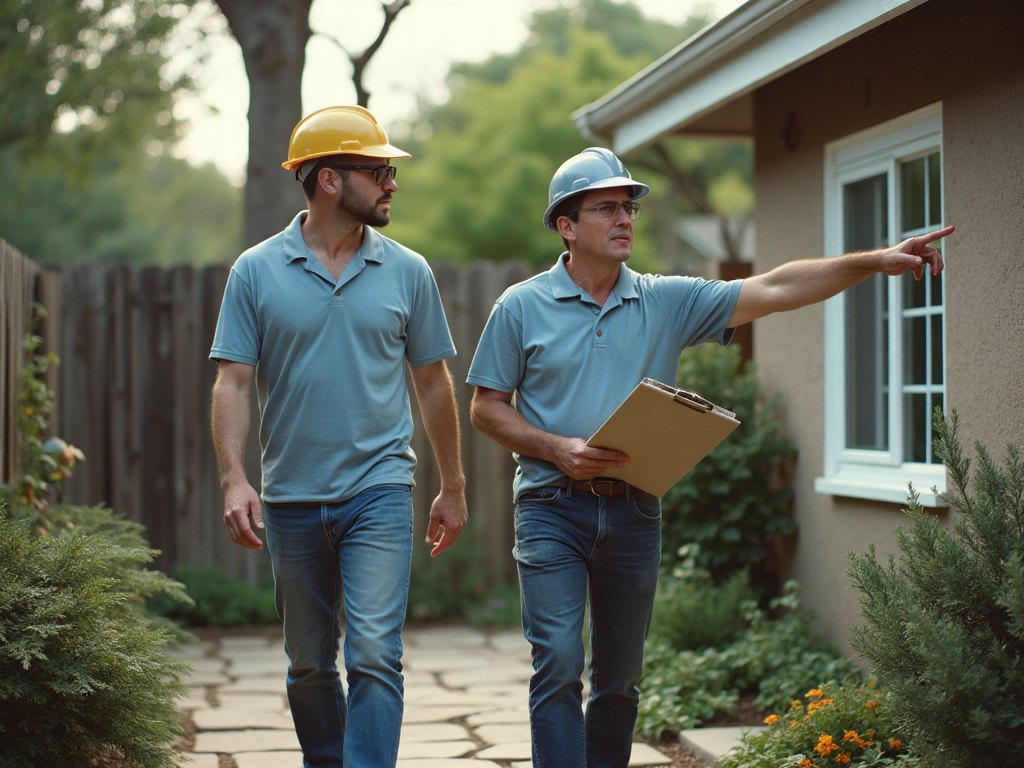
What are the 8 steps to buying and launching a residential home services franchise?
Home & Yard Services lists 663 brands and 5,650 matched SBA loans from 2010–2026. Buy-in averages roughly $112K–$254K, and about 6.16% of those loans went unpaid. Here are the eight steps from first curiosity to first customer call, in the order that saves the most money.
Think of it like buying a used truck: you check the paperwork before you kick the tires. Every number here is a rough public estimate, and your city, lease, and the brand's latest FDD will move it.
- Steps 1–2: Budget and credit. Set your cash ceiling, check your credit, and run both through the Affordability Calculator.
- Steps 3–4: Screen and read. Narrow brands with the Stock-Style Screener, then read each FDD's Items 5, 7, 19, and 20.
- Steps 5–6: Call and verify. Phone current and former owners, then hire a franchise attorney to review the contract.
- Steps 7–8: Fund and launch. Line up financing, sign, finish training, and book your first jobs before opening day.
Don't rush step 4. Item 19 earnings claims, Item 20 closures, and Item 7 startup costs tell you more than any sales call. Most home-service FDDs can be read in an evening.
Ask every owner one blunt question: what surprised you most in year one? Their answers are free, and they beat any brochure.
Why do white-collar corporate refugees thrive in blue-collar residential trade franchises?
Retail & Vending shows a 6.60% unpaid SBA rate on $181K–$394K buy-ins, while Home & Yard Services sits at 6.16% on $112K–$254K. Gyms, Health & Wellness hits 9.26%. Trades generally ask for less cash and no storefront lease, which is why laid-off managers keep finding them.
The skills carry over better than people expect. A homeowner with a leaky gutter doesn't care about your résumé. They care that you show up, quote fast, and fix it right.
- Sales and quoting: Ex-account managers already know how to close a $1,800 job.
- Hiring and scheduling: Running a team of five crews is a manager's job, not a tradesperson's.
- Budgets and reporting: Reading a profit-and-loss statement beats guessing.
- Systems thinking: Franchise playbooks reward people who follow a process.
Picture a former regional operations manager running three painting crews. She never touches a brush. She books estimates, checks job quality, and keeps the schedule full.
A lower unpaid rate is history, not a promise. Weak marketing, bad hiring, and thin cash can sink any trade. The structure just gives a manager fewer fixed costs to carry while learning.
Do you need a contractor license or trade background to own a home services franchise?
Many home services brands don't require a trade background. Cleaning & Restoration averages a $40,160 initial franchise fee and a $122K–$218K total buy-in, with 551 brands in the sector. Licensing is a local rule, not a brand rule, so requirements vary by state, city, and trade.
The split usually looks like this:
- Often no license: House cleaning, pressure washing, gutter cleaning, lawn care, and many painting or handyman models.
- Often a licensed qualifier: HVAC, plumbing, and electrical, where a licensed person may need to be on staff or be the owner.
- Certifications: Water, fire, and mold restoration may call for industry training and special insurance.
- Always needed: General liability insurance, vehicle coverage, and often bonding.
Here's the Main-Street rule: you can hire the skill, but you can't hire the accountability. If a tech floods a basement, the owner answers the phone.
Check Item 1 of the FDD for the brand's own list of regulated trades, and Item 11 for training. You can unlock free FDDs and Red-Flag Reports in the Free FDD Vault with 1-click email confirmation. Then confirm the details with your state licensing board before you sign anything.
| Sector | Brands | SBA Loans | Avg Buy-In Range | Unpaid Rate |
|---|---|---|---|---|
| Home & Yard Services | 663 | 5,650 | $112K–$254K | 6.16% |
| Cleaning & Restoration | 551 | 4,973 | $122K–$218K | 6.17% |
| Senior & Home Care | 238 | 2,710 | $111K–$237K | 5.77% |
| Retail & Vending | 317 | 2,636 | $181K–$394K | 6.60% |
| Food, Coffee & Quick-Serve | 2,251 | 20,243 | $365K–$862K | 7.36% |
| Gyms, Health & Wellness | 550 | 7,314 | $252K–$561K | 9.26% |
Which home service sub-trades—cleaning, painting, gutters, restoration, HVAC—have the best unit math?
Home & Yard Services averages $112K–$254K with a 6.16% unpaid SBA rate across 5,650 loans. Cleaning & Restoration averages $122K–$218K at 6.17% across 4,973 loans. Our data groups painting, gutters, and HVAC inside broad sectors, so brand-level math matters more than trade labels.
No sub-trade wins on every measure. Here is how to size each one up, using rough public estimates only:
- Cleaning: Low startup cost and repeat customers, but wages are the big expense.
- Painting: Bigger tickets and seasonal swings, so cash planning matters.
- Gutters: Simple equipment and recurring maintenance, but weather drives demand.
- Restoration: Urgent jobs and insurance work, but 24/7 on-call stress and training costs.
- HVAC: High tickets and service contracts, but licensing and heavy equipment raise the bar.
To compare brands fairly, pull the FDD and check Item 7 startup range, Item 19 revenue claims, royalty percentage, and Item 20 closures. Then ask: how many jobs a week do I need to cover payroll, royalties, and my own paycheck?
A brand with a modest fee and strong repeat work can beat a flashy one with big tickets and no recurring customers. Start with the Stock-Style Screener, and treat every figure as a starting point, not a forecast.
Free FDD & SBA Red-Flag Vault ($0)
Want the state-filed FDD & SBA Default Sheet for any brand?
Skip $99 FDD paywalls. Enter the brand (or budget) and your 5-digit zip code to unlock our Cost, SBA Payback & Red-Flag Report plus the archival state-filed FDD PDF whenever on file.
- 18,445 State FDD Filings Indexed: 1,750+ full FDD PDFs ready for $0 research.
- 14 Item-20 Owner Questions: Spot hidden store churn in two minutes.
Interactive Tool · 6-Month Working Capital & Family Cushion Planner
Calculate Your Safe Cash Cushion Before Opening Day
How do you hire, pay, and keep reliable residential technicians in a tight labor market?
Home & Yard Services is one of FranchiseMate's largest sectors at 663 brands, with a rough $112K–$254K buy-in and a 6.16% SBA unpaid rate. Labor is where those loans win or lose. Plan your technician pay, hiring pipeline, and training budget before you sign, because wages swing widely by city.
Start with where good techs actually come from. Skip the big job boards at first and ask local trade schools, military transition offices, and your own customers for referrals. A tech tired of a big-box company's commute and quotas will often take a fair wage and steady hours.
Then pay in a way that rewards the right habits. Here is what tends to work on Main Street:
- Hourly base plus bonus: Tie extra pay to on-time arrivals, clean reviews, and zero callbacks.
- Paid training days: Budget a week of ride-alongs before a new hire runs solo.
- Predictable schedules: Fixed routes beat random call-outs when you compete for people.
- Tool and uniform allowance: A small perk that signals respect.
Keeping people is cheaper than replacing them. Losing one tech can cost weeks of lost routes and rework. Check the FDD for franchisor training support, and pull the brand's report in the Free FDD Vault with one-click email confirmation. Wage and worker-classification rules vary by state, so confirm details with a local employment attorney.
How do recurring seasonal contracts beat one-time emergency repair tickets?
Cleaning & Restoration has 551 brands in FranchiseMate's data, with a rough $122K–$218K buy-in, a $40,160 average franchise fee, and a 6.17% SBA unpaid rate. Recurring seasonal contracts give you a more predictable calendar. One-time emergency tickets mean you restart the hunt every Monday morning.
Picture a customer on a spring and fall gutter plan. You know the route, the crew hours, and roughly what the month will bring before it starts. An emergency water-damage call pays well, but it lands at 2 a.m. and may never repeat.
Emergency work is not bad. It is just a shaky foundation. The healthiest shops treat it as the cherry on top of a base of repeat customers.
- Recurring wins: Twice-a-year gutter cleaning, monthly lawn visits, quarterly window plans, annual dryer-vent or HVAC tune-ups.
- Emergency wins: Higher tickets, fast cash, and strong reviews when you show up quickly.
- Best mix: Use emergencies to fill gaps while your plan base grows.
Seasonal plans also smooth the winter and summer dips, so payroll does not swing as hard. Ask owners on validation calls what share of their revenue is repeat work. Results vary widely and nothing is guaranteed, but a brand with no recurring offer asks you to rebuild demand daily. Compare sectors in the Stock-Style Screener before you dial.
When is the exact right math moment to add Truck #2 and a field lead?
Across 80,624 SBA franchise loans from 2010 to 2026, home-service sectors carry unpaid rates near 6%, so growing too fast has a real price. Add Truck #2 only when Truck #1 stays booked for several straight weeks and a trained field lead can run a route without you.
Here is a simple gut check. If Truck #1 turns away work or has a booking wait of more than a week or two, demand is knocking. If you are still chasing jobs to fill the day, a second truck just doubles the idle time.
The field lead matters as much as the truck. Without one, you become dispatcher, closer, and quality checker all at once, and you burn out fast. A good lead frees you to sell and manage.
- Cash cushion: Hold a few months of fixed costs, including the new truck's payment, insurance, and payroll.
- Booked backlog: Two or more weeks of scheduled recurring work.
- Lead ready: Someone trained, trusted, and paid to own the route.
A second vehicle plus tools can run tens of thousands of dollars by rough public estimates, and the cost varies by trade and city. Read your franchise agreement too, since some brands require approval or added training before you scale crews. Run your own numbers in the Affordability Calculator first.
| Signal | Green Light | Hold Off | |||||||||||||||||||||||||||||
|---|---|---|---|---|---|---|---|---|---|---|---|---|---|---|---|---|---|---|---|---|---|---|---|---|---|---|---|---|---|---|---|
| Booking wait | 1–2+ weeks out | Open slots most days | |||||||||||||||||||||||||||||
| Cash reserve | Several months of fixed costs | Thin or borrowed | |||||||||||||||||||||||||||||
| Field lead | Trained and trusted
How does a real-world industry breakdowns buyer run these numbers step by step?Home & Yard Services buy-ins average roughly $112K–$254K across 663 brands, with a 6.16% SBA unpaid rate on 5,650 loans. Picture a buyer with $90,000 cash, a $180,000 all-in budget, and a $90,000 loan. These are rough public estimates only; your city, lease, and updated FDD will change them. Meet Maria, a former HVAC dispatcher. Step one is the budget. She sketches $40,000 for the franchise fee (cleaning and restoration brands average about $40,160), $55,000 for a work van and equipment, $20,000 for launch marketing, $10,000 for licenses and insurance, and $55,000 for working capital. That adds up to $180,000. A $90,000 SBA-style loan at about 10.5% over ten years runs roughly $1,200 a month. Step two is the paperwork. Maria unlocks the free FDD and Red-Flag Report for each brand on her shortlist in the Free FDD Vault with 1-click email confirmation. She reads Item 5 (fees), Item 7 (startup costs), and Item 19 (earnings claims, if any). Then she compares trades with retail. Retail & Vending runs about $181K–$394K with a 6.60% unpaid rate. It also brings rent, inventory, and walk-in traffic worries. A trades brand swaps the storefront for a van. Step three is break-even, and it is a made-up example, not a promise. Say her fixed costs run about $6,500 a month, including the loan, insurance, vehicle, and software. If each $400 job leaves about $180 after labor, materials, and royalties, she needs roughly 36 jobs a month, or about nine a week. Then she stress-tests at 70% of that plan using the Affordability Calculator. If the plan only works on a perfect month, she walks away.
Educational Research & Estimates Notice (16 CFR Part 436): All startup ranges, SBA loan percentages, fee figures, and calculator outputs in this guide are rough public-record estimates for preliminary education only—not an offer to sell a franchise and not legal, CPA, or investment advice. Always verify current figures in the franchisor’s binding FDD with a franchise attorney and CPA.
Live FranchiseMate Scoreboard · Home & Yard Services
5 Graded Franchises Matching This Guide (Check Open Zip & Unlock FDD)
Free Interactive Decision Workbench
Put This Guide Into Action With Real FDD NumbersMatch your budget, stress-test SBA 1.25x DSCR cash flow, or generate a brand-specific Item 20 validation call script.
Continue Your Homework
3 Related Deep-Dive Ownership Guides 
Free FDD Vault, SBA Default Tape & Territory Check
Check which A-graded franchises & free FDDs are open in your zip code.Legacy portals only push ~350 ad-paying chains. Enter your 5-digit zip and cash tier to unlock the highest-graded open franchises and archival FDDs in your area. 3 things smart buyers check before wiring a dime
100% Free Public-Record Guarantee: Zero fee, zero obligation, and zero unsolicited spam—your inquiry only goes to the specific providers you authorize, and 1-click unsubscribe or STOP works anytime.
Check Open Zip & Unlock Your Free FDD Packet
Your comparison
|
Free FDD Vault & Open Territory Check
Check open zip codes & unlock FDD reportEnter your 5-digit zip and cash range to check territory availability and unlock our executive FDD & SBA report (+ archival FDD PDF when on file) for $0. |