Franchise Cost Guides

With the average U.S. car now 12.6 years old, 226 automotive franchises post a 5.99% SBA unpaid rate. Compare mobile auto vans, 3-bay quick lubes, and full repair centers.
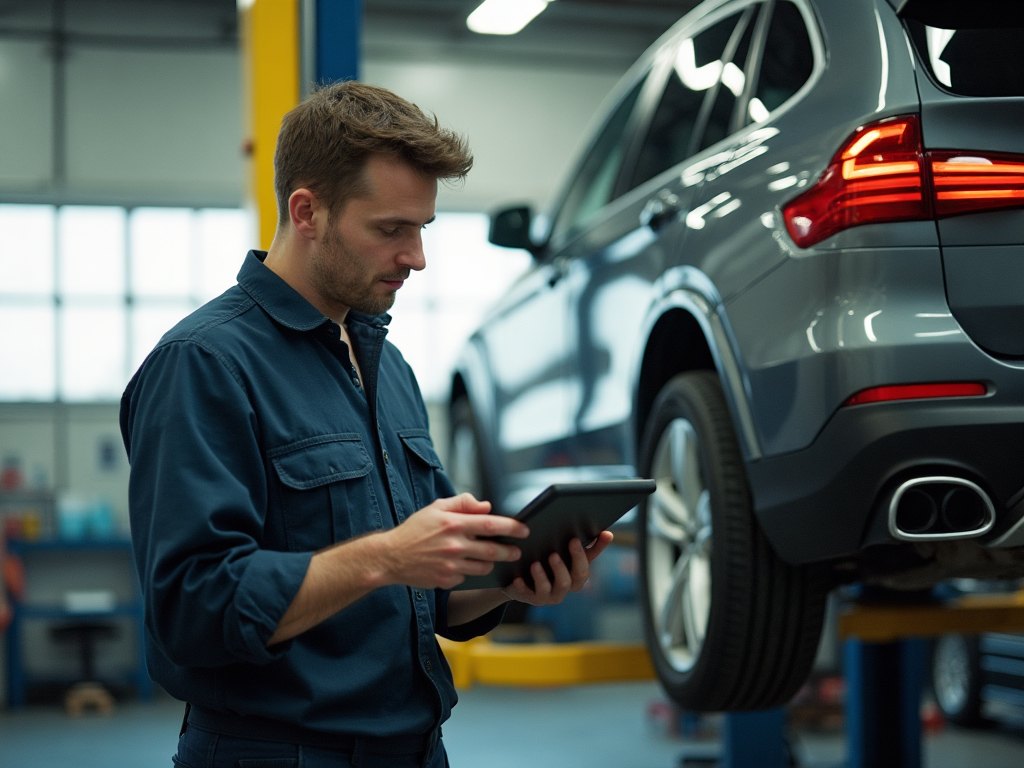
FranchiseMate tracked 226 auto and truck care brands and 2,655 matched SBA loans, with an average buy-in range of $322K–$756K. Quick-lube and mobile formats usually sit at the low end, while full-service brake and repair bays land higher. These are rough public estimates that shift by city, lease, and FDD updates.
The franchise fee is the small piece. Build-out, equipment, signage, and working cash do the heavy lifting. Run your own numbers in the Affordability Calculator before you fall for a brand's headline figure.
Picture a first-time owner in a mid-size Ohio town. A mobile brake service might get them rolling for the price of a nice truck. A three-bay lube center on a busy corner is a different animal, with a bigger lease and bigger payroll.
Always leave room for the first few months of rent, wages, and parts. Item 7 shows a range for a reason.
Leasing an existing bay can keep a build-out near the low end of the $322K–$756K sector range, while ground-up construction can push one shop well past it. Land, permits, and site work are the swing factors. These are rough public estimates; your city and lease decide the real number.
Taking over a former lube shop or gas-station bay is the budget route. The pit, drains, and bay doors may already exist. You pay for upgrades, signage, and compliance fixes, not a whole new building.
Ground-up is a different game. You are buying or ground-leasing a corner lot, then paying for grading, utilities, oil-water separators, and a contractor. Hotels and real estate brands in our data run $6.2M–$19.6M for a reason: dirt and concrete are expensive.
Environmental cleanup is the sleeper cost. An old auto site may carry soil or tank history, so ask for inspection reports before signing anything.
| Category | Typical Buy-In | SBA Unpaid Rate |
|---|---|---|
| Mobile auto service (format estimate) | $75K–$200K | Not tracked separately |
| Tint/wrap studio (format estimate) | $120K–$350K | Not tracked separately |
| Quick-lube (format estimate) | $300K–$700K | Not tracked separately |
| Auto & Truck Care sector (226 brands) | $322K–$756K | 5.99% |
| Food, Coffee & Quick-Serve (2,251 brands) | $365K–$862K | 7.36% |
| Gyms, Health & Wellness (550 brands) | $252K–$561K | 9.26% |
Equipment can swallow roughly $80K–$250K of an auto franchise's Item 7, depending on the service mix. Lifts, alignment racks, bulk oil systems, and scanners are the big tickets. Treat this as a rough public estimate and check each brand's actual Item 7 table, because ranges vary widely.
Item 7 is the FDD's startup cost table. It is where the real story lives, so unlock the free FDD and Red-Flag Reports in the Free FDD Vault with one-click email confirmation and read it line by line.
A quick-lube needs tanks and fluid lines. A tire and brake shop needs racks, changers, and balancers. Neither can skimp on scanners, because newer cars need updated software.
Look at whether the franchisor requires its own vendors. Locked-in suppliers can raise your equipment bill and your ongoing costs.
Auto and truck care franchises show a 5.99% SBA unpaid rate across 2,655 loans, better than food (7.36%) and gyms (9.26%). EV adoption is changing the mix rather than ending the need for service. Oil-change shops feel it first, while brake, tire, and suspension work holds steadier.
Electric cars do not need oil changes. That matters a lot to a shop whose traffic is built on a 5,000-mile sticker. As EVs grow in your market, a lube-only model may see fewer repeat visits.
Tires, though, still wear out, and EVs are heavy, so many go through them faster. Brakes, alignment, and suspension also need attention, even if regenerative braking slows pad wear.
Use the Stock-Style Screener to compare auto brands by unit growth and closures. No format is lower-overhead, so pick the one that fits your market and your cash.
Skip $99 FDD paywalls. Enter the brand (or budget) and your 5-digit zip code to unlock our Cost, SBA Payback & Red-Flag Report plus the archival state-filed FDD PDF whenever on file.
Adjust the numbers below to check your 20% down payment, 10-year SBA loan bill, and the Item 19 gross sales target needed to hit a healthy 2.2x sales-to-investment ratio:
Auto & Truck Care brands in FranchiseMate's dataset average a $322K–$756K buy-in, and 5.99% of 2,655 matched SBA loans went unpaid. Labor is often a big swing factor. Keeping ASE-certified technicians without bleeding margin comes down to pay structure, training, and schedule, not just hourly rate.
Here's the Main-Street truth: a great technician who walks out takes bay hours with them. An empty lift still costs rent, insurance, and equipment payments. Many owners find that paying a bit more for a steady, productive tech beats cycling through cheaper hires.
Here are common approaches owners use. Treat any pay figure as a rough local estimate and check wages in your own city:
Picture a quick-lube owner who promotes a lube tech into brakes after a six-month cert push. The cost is modest, the tech earns more, and the shop sells higher-ticket work. Pull a brand's report from the Free FDD Vault with 1-click email confirmation and read its training section before you sign.
FranchiseMate tracks 226 Auto & Truck Care brands and 2,655 matched SBA loans, and every shop sells the same thing: bay hours. Fleet accounts from delivery vans, plumbing trucks, and HVAC crews can fill quiet weekday mornings, when walk-in customers are at work and lifts sit empty.
Retail customers drop cars off before work and after 3 p.m., so midmorning goes quiet. Meanwhile a plumber's van parked at 9:30 a.m. loses its owner money every hour. Your empty bay and their idle truck solve each other's problem.
Ways owners usually win these accounts:
Fleet managers care about three things: uptime, honest quotes, and paperwork. A shop that texts when the van is ready and itemizes every repair earns repeat work. Skip that and the account walks to the next shop down the road.
A shop near a delivery hub might land a handful of vans on a rotating schedule. Fleet tickets are often discounted, so volume has to make up the difference. Plug your own estimated visits into the Affordability Calculator before counting on any of it; nothing here is guaranteed.
FranchiseMate matched 80,624 franchise SBA 7(a) and 504 loans from 2010 to 2026, including 2,655 in Auto & Truck Care, where buy-ins average $322K–$756K. SBA 504 loans can stretch real-estate payments up to 25 years, which suits a standalone auto center with land, a building, and lifts.
A 504 deal usually has three pieces: a bank loan covering roughly half, an SBA-backed community lender loan covering up to about 40%, and your down payment, often around 10% and sometimes more for special-use property like auto shops. Rates, terms, and rules change, so confirm with a lender.
Why it fits: a building and lifts hold lasting value, long payments lower the monthly bite, and the fixed-rate piece helps budgeting. The catch is that you now own a building, so a weak location is harder to leave. Sector-wide, Auto & Truck Care shows a 5.99% unpaid rate, below food at 7.36% and fitness at 9.26%, but above hotels at 2.02%.
Think of a family-owned tire shop buying its corner lot. The payment may resemble rent, but the owner builds equity instead of enriching a landlord. That equity is never guaranteed, and a slow shop still owes the bank. Before leaning on a 504, check these:
| Path | Best For | Watch Out For |
|---|---|---|
| SBA 504 | Land, building, and heavy lifts | Down payment, environmental checks, owning property |
| SBA 7(a) | Build-outs and working capital | Rates and fees vary by lender |
| Landlord lease | Lower upfront cash | Rent hikes and renewal terms |
| Equipment financing | Lifts, alignment racks, tanks | Payments continue if car counts dip |
| Cash or partner equity | Lowest interest cost | Thin cushion in slow months |
Auto & Truck Care brands average a $322K–$756K buy-in, with 5.99% of 2,655 SBA loans unpaid, so breakeven math matters. In FDD Item 19, look for average revenue per bay, cars per day, and average ticket, then compare them with your rent and payroll before you trust any projection.
Item 19 is optional. Some brands skip it, which is a flag by itself. If it's there, read the footnotes: how many shops were counted, how long they'd been open, and whether only mature locations made the cut.
What to pull out of it:
Here's an illustration with made-up numbers. If fixed costs (rent, payroll, royalties, utilities) run $45,000 a month and gross profit is $55 per car, you need about 820 cars a month, or roughly 31 to 32 per day over 26 open days. That's math practice, not a forecast.
If the FDD's numbers sit far above what the math says is realistic, ask current franchisees before you believe them. Run your own scenarios in the Stock-Style Screener, and unlock the free FDD & Red-Flag Report right here on FranchiseMate with 1-click email confirmation.
| Brand | FranScore | Est. Buy-In | SBA Loan Tape | Free FDD & Zip |
|---|---|---|---|---|
| Mac Tools | 8.5/10 (A) | $137,885 – $418,385 | 0.0% unpaid (20 loans) | |
| Freeway Insurance | 8.4/10 (A-) | $61,000 – $113,060 | Verify Item 10 | |
| Jiffy Lube | 8.4/10 (A-) | $207,000 – $422,650 | 0.0% unpaid (80 loans) | |
| Take 5 | 8.1/10 (A-) | See FDD | Verify Item 10 | |
| Turbo Tint | 8.0/10 (A-) | $214,510 – $281,400 | 0.0% unpaid (16 loans) |
Match your budget, stress-test SBA 1.25x DSCR cash flow, or generate a brand-specific Item 20 validation call script.

Legacy portals only push ~350 ad-paying chains. Enter your 5-digit zip and cash tier to unlock the highest-graded open franchises and archival FDDs in your area.
Enter your 5-digit zip and cash range to check territory availability and unlock our executive FDD & SBA report (+ archival FDD PDF when on file) for $0.