Costs & Funding · 9-Min Read · 2,046 Words + Interactive Tools · Updated Nov 2026
How Can I Find Vetted Franchises Under $100,000 (and Under $50,000) That Actually Scale?
We screened more than 750 graded North American franchises with estimated minimum investments under $100,000 to separate scalable multi-van winners from dead-end solo gigs.
Skipping retail concrete, grease hoods, and triple-net landlords is how sub-$100K mobile franchises protect cash.
Can you really buy a legitimate, scalable franchise with a total budget under $100,000?
FranchiseMate grades 13,999 North American franchises and dealerships, including 3,307 small-cap sleepers with 1–65 units. Yes, legitimate brands exist under $100,000 total, mostly in mobile, B2B, and home-service lanes. But most sector averages start above $100K, so the cheap ones are a minority you have to screen carefully.
Here's the plain truth. Home & Yard Services averages $112K–$254K across 663 brands. Cleaning & Restoration runs $122K–$218K across 551. B2B & Office Services sits at $108K–$223K across 1,004. These are rough public estimates that shift by city, lease, and FDD updates. The low end of each range is where sub-$100K deals live.
Scale is the harder test. A cheap franchise is only a good one if it can grow past you. You want open territories, owners who add second routes or hire crews, and a brand that isn't churning through owners. That's why small-cap sleepers deserve a look: open territory is the whole point.
Start with your cash, not your dream. The Stock-Style Screener lets you sort by buy-in, unit count, and SBA outcomes. Then check three things in every FDD:
Item 7 high end: plan around the top number, not the bottom.
Item 20 trends: are units growing, or are owners quietly leaving?
Item 19 claims: does the brand share real earnings data at all?
What is the real difference between under-$50K franchises and the $50K–$100K sweet spot?
Under $50,000 buys little more than a license, training, and basic gear, while $50,000–$100,000 starts funding working capital and launch marketing. Mobile sports and STEM kids programs sit at roughly $45K–$110K, in a sector with a 4.28% SBA unpaid rate, among the lower rates we track.
The difference is runway. Average Item 5 fees run $38,478 in B2B & Office Services, $40,160 in Cleaning & Restoration, and $46,787 in Senior & Home Care. If the fee is $40K and your total budget is $50K, you have $10K left for a vehicle, insurance, tools, and ads. That's thin, and thin budgets break first.
Between $50K and $100K, the picture changes. You can add a used van, local marketing, and a few months of breathing room. You might even afford a part-time helper in year one. Real-world costs vary a lot by city, so treat every number here as a starting estimate.
Under $50K: fee-heavy, light cushion, usually a solo owner-operator.
$50K–$100K: room for equipment, launch ads, and a first hire.
Either range: the FDD's high-end estimate matters more than the low end.
Data Chart: Hundreds of legitimate mobile, home-service, cleaning, and B2B franchises launch below $100K—without touching brick-and-mortar rent. (Illustrative public-record aggregates; verify individual brand figures in the current FDD.)
Which mobile, B2B, inspection, and exterior-cleaning models scale past one owner in a van?
Home & Yard Services (663 brands, 6.16% SBA unpaid rate) and Cleaning & Restoration (551 brands, 6.17%) offer the most low-cost entry points, while B2B & Office Services (1,004 brands) carries a higher 8.02% unpaid rate. Scale comes from hiring crews and adding routes, not from a low buy-in number.
Think about how a pressure-washing or gutter-cleaning owner grows. Year one, you run the truck. Year two, you promote a crew lead and add a second rig. That only works if the brand teaches hiring, scheduling, and pricing, not just spraying.
Inspection and B2B models scale differently. A home-inspection owner can add inspectors under one brand, and a commercial service owner can win recurring contracts. Recurring work beats one-off jobs because it smooths out slow months. Still, no model is lower-overhead, and B2B's 8.02% unpaid rate is a reminder to verify before you sign.
Use this quick scale test on any cheap brand:
Second-unit proof: do FDD owners run multiple vehicles or territories?
Recurring revenue: contracts and repeat customers, not just one-time jobs.
Hiring playbook: training for employees, not only for you.
Open territory: room to grow near you without overlap.
Open any brand's FDD in our Free FDD Vault. Unlock it with 1-click email confirmation and read Items 7, 11, 19, and 20 first.
What fee traps and lead-generation myths hide inside ultra-cheap $25K–$45K franchises?
Ultra-cheap franchises often hide their real costs in royalties, tech fees, and ad funds rather than the upfront fee. B2B & Office Services shows a $38,478 average Item 5 fee and an 8.02% SBA unpaid rate, second-highest of the 12 sectors we track. A low sticker price is not a low-risk price.
The biggest myth is "we'll send you leads." Read Item 11 closely. Many brands only promise a website and a call center, and some sell leads back to owners. A franchisor that earns on every lead has different goals than you do.
Financing is another trap. The U.S. SBA Directory lists just 2,607 eligible brands, out of the 80,624 matched franchise loans we've tracked since 2010. Many ultra-cheap brands may not be on that list, so you could be funding it all from savings. Savings spent on fees can't cover a slow first quarter.
Watch for these red flags:
Minimum royalties: fixed monthly payments owed even in slow months.
Stacked fees: software, call center, and ad-fund charges add up quickly.
No Item 19: no earnings data means you're guessing.
High turnover: check Item 20 for owners leaving or transfers.
Every number here is a rough public estimate, not a promise. Unlock free FDDs and Red-Flag Reports on FranchiseMate with 1-click email confirmation before you wire a deposit.
Free FDD & SBA Red-Flag Vault ($0)
Want the state-filed FDD & SBA Default Sheet for any brand?
Skip $99 FDD paywalls. Enter the brand (or budget) and your 5-digit zip code to unlock our Cost, SBA Payback & Red-Flag Report plus the archival state-filed FDD PDF whenever on file.
18,445 State FDD Filings Indexed: 1,750+ full FDD PDFs ready for $0 research.
14 Item-20 Owner Questions: Spot hidden store churn in two minutes.
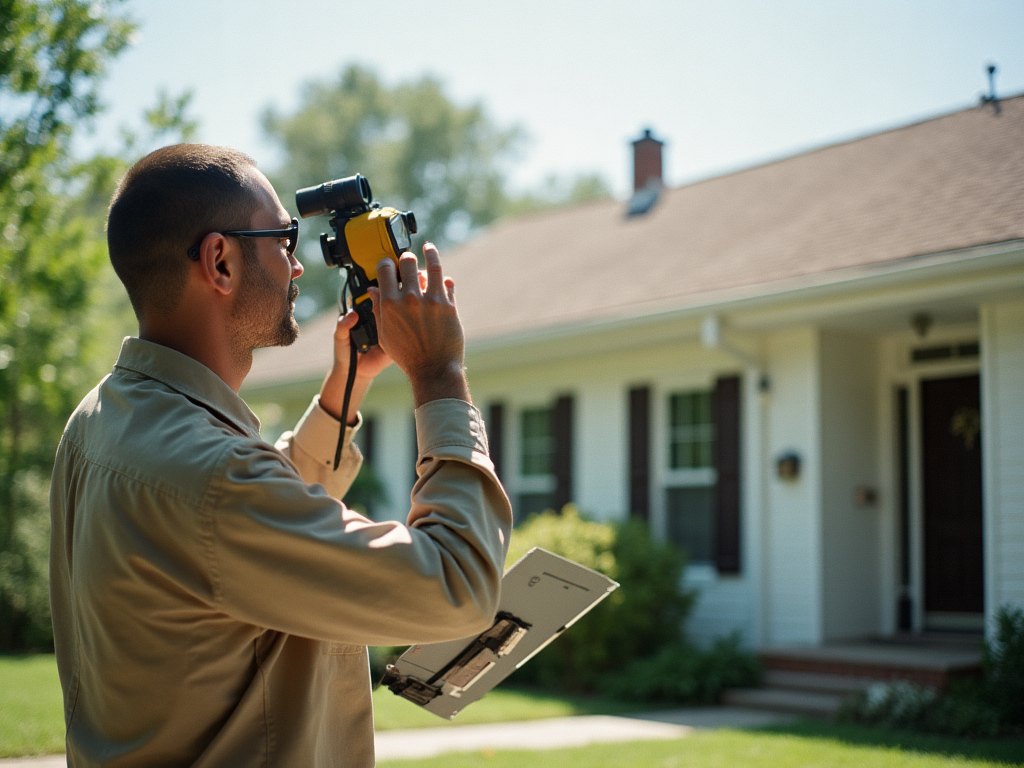
Low-cost inspection, cleaning, and patch franchises launch from a home garage with zero retail lease obligation.
Test Any Franchise’s Buy-In Against SBA Debt & Sales Targets
Adjust the numbers below to check your 20% down payment, 10-year SBA loan bill, and the Item 19 gross sales target needed to hit a healthy 2.2x sales-to-investment ratio:
Should you buy a $75,000 franchise in cash or use $75,000 as 20% down on a $300,000 SBA build?
FranchiseMate matched 80,624 SBA franchise loans from 2010 to 2026, and sector unpaid rates ranged from 2.02% to 9.26%. Spending $75,000 cash on a small brand usually means less debt and lower monthly pressure. Using it as 20% down on a $300,000 build means bigger upside, but bigger fixed bills.
Run the rough math. A 20% down payment on $300,000 is $60,000, which leaves about $15,000 of your $75,000 for cushion. The remaining $240,000 loan could run roughly $3,100–$3,400 a month over ten years. Rates, terms, and fees vary by lender, so treat that as a ballpark.
That payment is due whether your first month brings in $4,000 or $40,000. Sectors with higher buy-ins also tend to carry higher stress. Gyms, Health & Wellness shows a 9.26% unpaid rate, and Food, Coffee & Quick-Serve shows 7.36%. Home & Yard Services, at $112K–$254K, sits near 6.16%.
Choose cash when the model is mobile or low-overhead and you want a long runway.
Choose SBA when the brand discloses solid Item 19 data and you can still hold six months of reserves.
Skip the build when your $15,000 cushion is your only safety net.
A cash-funded $75,000 route-based business can fail too. But a smaller mistake is easier to survive than a $240,000 one.
How do you verify Item 19 average unit sales on sub-$100K brands?
FranchiseMate indexes 18,445 state FDD filings, with 1,750+ full FDD PDFs in its free vault, and Item 19 is where a brand may disclose sales or earnings. Many sub-$100K brands skip it or show only their best units. Check who is counted, how many units, which time period, and which costs are left out.
Start by unlocking the document. You can open free FDDs and Red-Flag Reports in the Free FDD Vault with 1-click email confirmation. Then read Item 19 slowly, footnotes first.
Sample size: Ten units out of 200 is a highlight reel, not an average.
Gross versus net: Sales figures rarely include royalties, labor, fuel, or your own pay.
Time window: A twelve-month snapshot can hide a bad year.
Mature units only: Numbers from owners with five years in say little about your first twelve months.
Next, cross-check Item 20 for closures, transfers, and terminations. If Item 19 looks great but a third of units changed hands last year, something does not add up.
Finally, call five to ten owners from the Item 20 list, including at least two who left. Ask what they actually took home in months 6 through 12. Public numbers are a starting point, and your city, lease, and hustle will change the picture.
Which overlooked small-cap sleeper franchises under $100K still have wide-open metro zip codes?
FranchiseMate flags 3,307 overlooked small-cap sleepers, meaning brands with 1 to 65 units and open territories, out of 13,999 graded entities. Under $100K, these can offer open metro zip codes. They can also have thin support and unproven systems, so verify before you fall for the "ground floor" pitch.
Sleepers cluster in a few places: mobile sports and STEM programs for kids ($45K–$110K), B2B and office services, and cleaning niches. A mobile coaching brand with 18 units might have your whole county open. A brand with 900 units may have already carved up your best zip codes.
Use the Stock-Style Screener to filter by unit count and price, then dig into the details.
Territory proof: Ask for a written zip-code map with population and income data, not a verbal promise.
Net unit growth: Look for openings that outnumber closures over three years.
Support ratio: Count corporate staff against franchisees. One trainer for 40 owners is a problem.
Founder skin in game: Check whether the company runs its own profitable units.
Small brands can pivot fast, or they can run out of money. Read the Item 21 financials to see if the franchisor can survive a slow year.
Pre-Wire Checklist: Verify These Five Items Before Paying Any Sub-$100K Franchise Fee
Check
Where to Look
Green Flag
Red Flag
Earnings claims
Item 19
Large sample, costs listed
Top units only
Owner turnover
Item 20
Few exits, stable transfers
Rising closures
Franchisor health
Item 21
Positive cash, audited
Going-concern warning
Territory
Item 12
Exclusive, mapped
Vague or shared
Real costs
Items 5–7
Clear ranges, refundable terms
Hidden mandatory add-ons
How do you stress-test your Year-1 family budget before wiring a low-cost franchise fee?
Senior & Home Care brands average $111K–$237K with a $46,787 average fee, and Cleaning & Restoration runs $122K–$218K with a $40,160 fee. So a "cheap" franchise can still demand a long runway. Budget twelve months of household bills plus launch costs before you wire a single dollar.
Start with your real monthly spending: rent or mortgage, food, insurance, car, kids, debt. If that is $5,500, twelve months is $66,000. That cash is separate from the franchise fee, and these are rough figures that will differ for every household.
Then break your plan on purpose. Run three bad-day scenarios and see if the family survives each one.
Sales 30% below plan: Can you still cover the household and the franchisor's royalty?
Three-month launch delay: Permits, hiring, and licensing often run late.
One surprise repair: A van transmission or a broken machine can cost thousands.
Spouse income loss: If your household relies on one paycheck, plan for a gap.
Plug these numbers into the Affordability Calculator, and if you fail even one scenario, lower your target price or wait. No franchise promises profit, and the safest owners are the ones who planned for a rough first year.
Educational Research & Estimates Notice (16 CFR Part 436): All startup ranges, SBA loan percentages, fee figures, and calculator outputs in this guide are rough public-record estimates for preliminary education only—not an offer to sell a franchise and not legal, CPA, or investment advice. Always verify current figures in the franchisor’s binding FDD with a franchise attorney and CPA.
Live FranchiseMate Scoreboard · Graded Franchises Under $100,000
5 Graded Franchises Matching This Guide (Check Open Zip & Unlock FDD)
Public-record estimates from FranchiseMate’s 12,107-brand database; verify all figures in the current FDD.
Check which A-graded franchises & free FDDs are open in your zip code.
Legacy portals only push ~350 ad-paying chains. Enter your 5-digit zip and cash tier to unlock the highest-graded open franchises and archival FDDs in your area.
3 things smart buyers check before wiring a dime
Archival State FDDs ($0): Audit Item 5, 6, 7, 19 & 20 filings without $99 document paywalls.
80,624 Federal SBA Loans: Verify real bank charge-off rates vs. the 3.8% U.S. franchise norm.
Open Territory Leverage: Compare 3 contenders in your zip code before speaking with sales reps.
100% Free Public-Record Guarantee: Zero fee, zero obligation, and zero unsolicited spam—your inquiry only goes to the specific providers you authorize, and 1-click unsubscribe or STOP works anytime.
Enter your 5-digit zip and cash range to check territory availability and unlock our executive FDD & SBA report (+ archival FDD PDF when on file) for $0.