Franchise Cost Guides · 10-Min Read · 2,238 Words + Interactive Tools · Updated Nov 2026
How Much Does a Cleaning, Janitorial, or Restoration Franchise Cost?
Across 551 cleaning & restoration brands, buy-ins span $18K sub-janitorial contracts to $220K+ insurance-restoration fleets. Learn which tier builds a real asset.
Cleaning and restoration franchises skip retail storefronts—putting startup dollars into trucks, extractors, and crew hiring.
How do startup costs compare across maid services, nightly janitorial, power washing, and restoration?
Across 551 cleaning and restoration brands in FranchiseMate's dataset, the average all-in buy-in runs roughly $122K–$218K, with a $40,160 average franchise fee. Maid services and nightly janitorial sit near the low end, power washing lands in the middle, and restoration climbs highest. Treat these as rough public estimates that shift by city and lease.
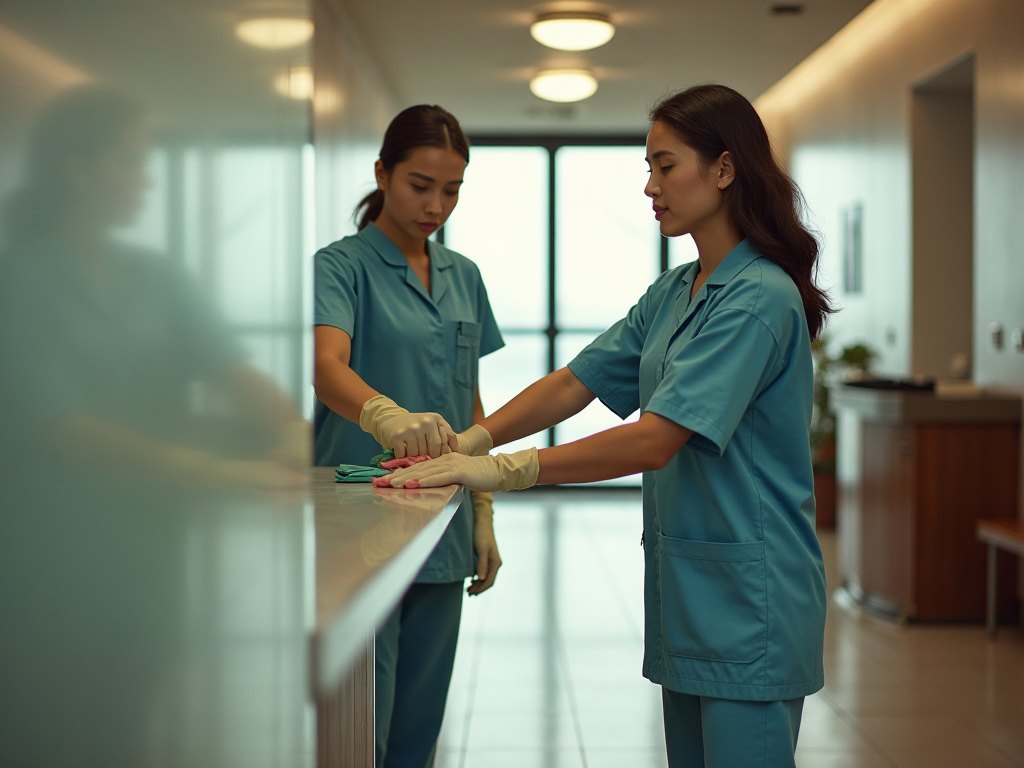
Here's the Main Street version. A maid service is mostly labor, supplies, a couple of branded cars, and marketing to win homes. Nightly janitorial runs on office contracts, so your money goes to insurance, bidding time, and cash to pay crews before the first invoice clears. Power washing needs a trailer or truck, a hot-water rig, and a smart weekend schedule.
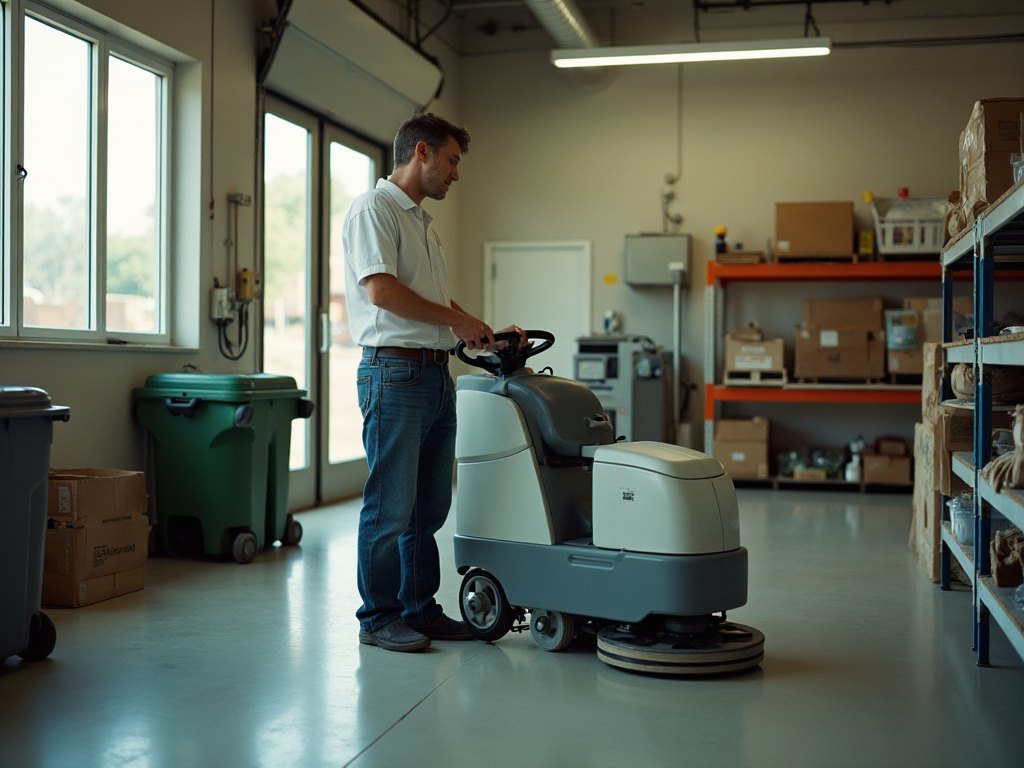
Restoration is the heavy hitter. Dehumidifiers, air movers, moisture meters, and a work truck add up fast, and many brands also expect a 24/7 phone line and on-call techs.
Maid service: light equipment, but crew turnover can drain you.
Nightly janitorial: low gear, heavy on insurance and payroll float.
Power washing: rigs and trailers, with a seasonal dip in cold states.
Restoration: most gear, most working capital, biggest checks.
A rough rule: the cheaper the entry, the more your own sales hustle matters. Two brands with the same sticker price can differ by tens of thousands once you add a truck, insurance deposits, and three months of payroll. Model your cash gap in the Affordability Calculator before trusting any headline price.
B2B & Office Services shows 1,004 brands, 5,379 SBA loans, and an 8.02% unpaid charge-off rate, versus 6.17% for Cleaning & Restoration. Cheap master-janitorial franchises near $15,000 often lean on "guaranteed accounts," and that promise deserves a hard look before you sign.
Here's how the trap works. The franchisor sells you a package and says it will hand you accounts worth a set monthly amount. Then you read the fine print. Often the accounts are small, spread far apart, low-paying, or cancel on 30 days' notice, and the promise ends once the guarantee window closes.
Picture a buyer handed four small offices across a metro area. After drive time, supplies, and labor, each one barely pays. Another buyer gets accounts that cancel after month one, and the guarantee quietly expires.
A low buy-in does not mean low risk. The real cost often shifts to your time, your insurance, and your payroll float. Ask these questions first:
Guarantee terms: what counts as an account, and for how long?
Replacement rules: who covers a customer who cancels?
Item 19 data: are earnings claims shown, or is it silence?
Ongoing fees: are there billing or account-management charges?
Item 20 churn: how many owners closed or transferred?
You can unlock free FDD and Red-Flag Reports in the Free FDD Vault with 1-click email confirmation. Have a franchise attorney review any contract before you sign.
Data Chart: Commercial office janitorial starts leanest; insurance water/fire restoration carries higher truck & dehumidifier outlays. (Illustrative public-record aggregates; verify individual brand figures in the current FDD.)
Why do insurance-paid water and mold restoration franchises command higher margins and higher buy-ins?
Restoration brands tend to sit at the high end of cleaning buy-ins because insurance carriers often pay the bill and jobs are bigger. Inside a sector of 551 brands and 4,973 SBA loans averaging $122K–$218K, full water-and-mold setups can exceed that range. Gear, trucks, and certifications drive the gap.
A single water-loss job can run into the thousands of dollars, and the homeowner is often not the one writing the check. Adjusters approve a scope of work, so you spend less time haggling and more time drying walls. That is why gross margins can look better on paper than a weekly house clean.
The higher buy-in pays for what makes those jobs possible: commercial dryers, moisture mapping tools, training, vehicles, and staff ready at 2 a.m. when a pipe bursts. Mold work adds containment gear and licensing rules that vary by state.
Carrier pricing: insurers may cap what they pay per job.
Slow payments: you can wait weeks for a check after paying techs.
Storm swings: busy seasons can follow quiet ones.
Better margins on paper are not illustrative return. Compare brands in the Stock-Style Screener and check each FDD's Item 19 before you assume a number.
Rough public estimates for cleaning-related franchise models (vary by city, lease, and FDD updates)
Model
Rough Buy-In
SBA Unpaid Rate
Main Cost Driver
Maid service
$75K–$150K
6.17%
Crew payroll, marketing
Nightly janitorial
$108K–$223K sector avg; entry masters from ~$15K
8.02%
Insurance, payroll float
Power washing
$112K–$254K
6.16%
Hot-water rig, trailer
Water/mold restoration
$150K–$400K+
6.17%
Drying gear, trucks
Cleaning & Restoration average
$122K–$218K
6.17%
$40,160 avg fee
What trucks, extractors, chemical systems, and bonding actually make up Item 7?
Item 7 in a cleaning FDD lists a low-to-high estimate, and the sector's average range lands near $122K–$218K, with a $40,160 average franchise fee taking the first bite. Trucks, extractors, chemical systems, and bonding fill most of the rest, so read each line carefully.
Think of Item 7 as a shopping list with a price range beside every item. Brands often list the low end as if everything goes perfectly. Plan closer to the high end, especially in pricey cities.
Vehicle or trailer: purchase, lease deposit, and wrap. A restoration truck costs far more than a maid-service car.
Extractors and machines: carpet extractors, floor machines, hot-water pressure washers, and for restoration, dryers and air movers.
Chemical systems: a starter stock of cleaners, antimicrobials, and supplies, often bought only from approved vendors.
Insurance and bonding: general liability, workers' comp, and a bond that covers client losses from employee theft. Many office clients demand it.
Working capital: the "additional funds" line that covers payroll and fuel until customers pay.
Watch for required vendors with marked-up pricing and for training or travel costs hiding outside the main total. Those items can push your real number past the FDD's high estimate.
Get the actual Item 7 table for any brand through the Free FDD Vault. Unlock it with 1-click email confirmation, then compare it line by line with your own quotes.
Free FDD & SBA Red-Flag Vault ($0)
Want the state-filed FDD & SBA Default Sheet for any brand?
Skip $99 FDD paywalls. Enter the brand (or budget) and your 5-digit zip code to unlock our Cost, SBA Payback & Red-Flag Report plus the archival state-filed FDD PDF whenever on file.
18,445 State FDD Filings Indexed: 1,750+ full FDD PDFs ready for $0 research.
14 Item-20 Owner Questions: Spot hidden store churn in two minutes.
Recurring 12-month office and medical cleaning contracts create predictable monthly billing with low equipment wear.
Test Any Franchise’s Buy-In Against SBA Debt & Sales Targets
Adjust the numbers below to check your 20% down payment, 10-year SBA loan bill, and the Item 19 gross sales target needed to hit a healthy 2.2x sales-to-investment ratio:
How do recurring bi-weekly residential maid routes build sellable equity over 5 years?
Cleaning and restoration brands in FranchiseMate's data average a $122K–$218K buy-in and a $40,160 Item 5 fee across 551 brands, and maid-style residential models usually sit at the lower end of that range. Recurring bi-weekly clients are the asset a future buyer pays for, because repeat visits make revenue easier to predict.
Here's Main-Street math with round, made-up numbers for illustration only. Picture 60 homes on a bi-weekly schedule at about $150 a visit. That's roughly $234,000 a year in billings before wages, supplies, royalties, and insurance. Your real numbers will swing with your city, pay rates, and the brand's rules.
Equity tends to build in stages:
Years 1–2: You fill the calendar. Most owners clean alongside the crew, and every cancelled client stings.
Years 3–4: Routes get tighter, drive time drops, and a trusted crew lead can run daily jobs.
Year 5: A steady book of repeat clients, clean records, and a manager in place make the business easier to hand off.
Exit rules: Check Item 17 for transfer fees and franchisor approval before counting on a sale.
Two things drain route value: churn and owner dependence. If clients only trust you, a buyer sees a job, not a business. Ask for retention numbers, too. A brand that can't show them may not track them.
Before you sign, read the brand's Item 19 and Item 20 closure and transfer counts in the Free FDD Vault, where FDDs and Red-Flag Reports unlock free with 1-click email confirmation.
What employee turnover, bonding, and vehicle insurance costs hit cleaning operators?
Cleaning and restoration franchises show a 6.17% unpaid rate across 4,973 SBA loans, and labor and insurance are two of the costs that squeeze thin margins. Turnover, bonding, and vehicle coverage rarely headline a sales pitch, yet each one can chew through cash, with rough amounts varying by state, carrier, and driving records.
Staff turnover: Cleaning crews often churn fast. Each replacement means recruiting, background checks, and training hours, so budget a hiring cushion instead of assuming a steady team.
Bonding and liability: Commercial clients often want proof of coverage. Rough public estimates run from a few hundred to a few thousand dollars a year, depending on state and limits.
Commercial auto: Business vehicle policies cost more than personal ones, and a single at-fault claim can raise rates for years.
Workers' comp: Lifting, chemicals, and wet job sites push this near the top of the expense list, especially in restoration.
Picture a two-van maid owner who loses two cleaners in one month. Jobs get dropped, clients drift away, and the owner ends up scrubbing bathrooms instead of selling. That's how a small labor problem turns into a cash problem.
Restoration adds another twist. After a flood call, you pay crews and buy supplies before the insurer pays you.
Ask the franchisor which coverages the system requires, then get your own quotes before signing. Insurance amounts are rough estimates and change by location. Plug the monthly totals into the Affordability Calculator so you see the true payroll-plus-insurance load, not just the franchise fee.
How do cleaning & restoration franchises score across 4,973 SBA loans (6.17% unpaid rate)?
Across 4,973 matched SBA loans and 551 brands, cleaning and restoration franchises post a 6.17% unpaid rate, roughly tied with Home & Yard Services at 6.16%. That sits well below Food & Quick-Serve at 7.36%, B2B & Office Services at 8.02%, and Gyms at 9.26%, yet above Hotels at 2.02%.
Why the middle-of-the-pack score? Cleaning avoids big restaurant build-outs and studio leases, but payroll and customer churn still bite. Brand averages also hide wide gaps: some brands perform far better, some far worse. A sector unpaid rate is a snapshot, not a forecast for any one owner.
Put it next to the extremes. Hotels at 2.02% are asset-backed but need roughly $6.2M–$19.6M. Gyms at 9.26% carry studio lease risk. Cleaning's lower buy-in can leave more breathing room if you keep working capital in reserve.
The data behind the score is broad. FranchiseMate matched 80,624 SBA 7(a) and 504 franchise loans from 2010 to 2026, and the SBA directory lists 2,607 eligible brands. Use the Stock-Style Screener to filter cleaning brands by buy-in, unit count, and open territories.
Then check these inside each FDD:
Item 20 closures: How many outlets left the system last year?
Item 19 earnings: Does the brand show real numbers, or stay silent?
Small-cap sleepers: Brands with 1–65 units can look cheap, but support may be thin.
Red-Flag Reports: Unlock them free with 1-click email confirmation.
Cleaning budget match-up (rough public estimates; verify in each FDD)
Budget
Models to study
Main risk
First check
About $60K
Pressure washing, mobile cleaning
You sell and work every job
Item 19; any "guaranteed accounts" claim
About $125K
Maid service, commercial routes
Staff turnover
Item 7 working capital
$150K–$250K
Larger janitorial, entry restoration
Vehicles, insurance costs
Item 8 supplier rules
$250K+
Full restoration with trucks and drying gear
Slow insurer payments
Item 20 closures
How do you pick the right cleaning sub-sector for a $60K, $125K, or $250K budget?
Cleaning and restoration brands average a $122K–$218K range, so a $60K budget sits below the typical buy-in, $125K lands near the bottom of it, and $250K clears the top. Your budget should include working capital, not just the fee, since payroll and insurance come due before cash does.
Here's a simple way to match money to model:
Around $60K: Look at pressure washing, mobile cleaning, or small-footprint home services where you're also the crew. Be wary of low-fee master janitorial pitches that lean on promised accounts.
Around $125K: Maid services or commercial routes with one hired helper fit here. Keep a payroll reserve of a few months.
Around $250K: Entry-level restoration with trucks, drying gear, and certifications starts to fit, but insurers pay slowly, so cash cushions matter.
Remember the buy-in is only part of the check. Item 7 includes working capital, and fees, vehicles, and insurance vary by city and FDD updates. These tiers are rough public estimates, not quotes. Two owners with the same $125K can end up in very different spots if one holds six months of reserves and the other holds none.
Run each target through the Affordability Calculator with your savings, loan terms, and a conservative revenue month. If the math only works in a perfect year, move down a tier or pick a different model.
Then open the Free FDD Vault, unlock two or three finalists with 1-click email confirmation, and compare Items 5, 7, 19, and 20 side by side. Boring homework beats expensive regret.
Educational Research & Estimates Notice (16 CFR Part 436): All startup ranges, SBA loan percentages, fee figures, and calculator outputs in this guide are rough public-record estimates for preliminary education only—not an offer to sell a franchise and not legal, CPA, or investment advice. Always verify current figures in the franchisor’s binding FDD with a franchise attorney and CPA.
Live FranchiseMate Scoreboard · Cleaning & Restoration Franchises
5 Graded Franchises Matching This Guide (Check Open Zip & Unlock FDD)
Public-record estimates from FranchiseMate’s 12,107-brand database; verify all figures in the current FDD.
Check which A-graded franchises & free FDDs are open in your zip code.
Legacy portals only push ~350 ad-paying chains. Enter your 5-digit zip and cash tier to unlock the highest-graded open franchises and archival FDDs in your area.
3 things smart buyers check before wiring a dime
Archival State FDDs ($0): Audit Item 5, 6, 7, 19 & 20 filings without $99 document paywalls.
80,624 Federal SBA Loans: Verify real bank charge-off rates vs. the 3.8% U.S. franchise norm.
Open Territory Leverage: Compare 3 contenders in your zip code before speaking with sales reps.
100% Free Public-Record Guarantee: Zero fee, zero obligation, and zero unsolicited spam—your inquiry only goes to the specific providers you authorize, and 1-click unsubscribe or STOP works anytime.
Enter your 5-digit zip and cash range to check territory availability and unlock our executive FDD & SBA report (+ archival FDD PDF when on file) for $0.